Recent

Showing posts with label science. Show all posts

Sunday, 24 March 2019

23:29

Swedish startup's 'UFO' turns heads at Vegas electronics show

UFO

ufo ufo UFO
The young Swedish firm is giving visitors the full treatment with a glamor gadget that resembles a tiny alien spacecraft this week at the Consumer Electronics Show in Las Vegas.
UFO

The young Swedish firm is giving visitors the full treatment with a glamor gadget that resembles a tiny alien spacecraft this week at the Consumer Electronics Show in Las Vegas.
UFO
Face masks, which typically involve coating one's face with skin-loving lotions that work their magic while drying for 20 minutes or so, were among top search terms at Google last year.
UFO
Foreo, which was founded in 2013 and boasts nearly a half-billion dollars in annual revenue, decided sheet masks were due for a make-over with some help from technology.
UFO
"The sheet mask hasn't changed since ancient Egyptian times," Foreo spokeswoman Dawn Watt told AFP at a CES event.
UFO
"This is the world's first smart mask."
UFO
The puck-shaped device fits easily in the palm of a hand. Face mask ingredients are placed inside and activated by heating or cooling elements as the "UFO" glides about a face.
UFO
"When you are finished it is like you've had a full facial experience, but in only 90 seconds," Watt said.
UFO
Foreo chief executive Paul Peros was adamant that he used UFO, which the company said was a play on 'Your Future Obsession,' each morning and evening.
UFO
"Of course my wife thinks my face is prettier," Peros quipped when asked.
UFO
"Why else would I do it?"
UFO
UFO models will be priced at $179 and $279 when they are released to the mass market in April, but can be bought at discount online at Kickstarter.

Foreo also sells mask ingredients priced at $10 for a seven treatment packets.

Watt said the beauty industry is steadily merging with the tech world in a trend that is inevitable and "amazing."

Saturday, 9 March 2019

22:55

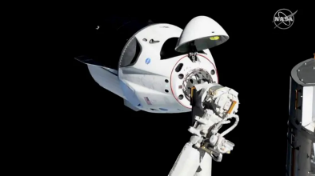
SpaceX Crew Capsule Ends Test Flight to ISS With Ocean Splashdown

Space x Crew
SPACE X CREW CAPSULE

SpaceX's swanky new crew capsule returned from the International Space Station to an old-fashioned splashdown in the Atlantic on Friday, successfully ending a test flight that could lead to astronaut rides later this year.

The Dragon capsule undocked from the orbiting lab early Friday. Six hours later, the capsule carrying a test dummy parachuted into the ocean, a couple hundred miles off the Florida coast.

It was the final hurdle for the six-day demo, a critical prelude to SpaceX's first flight with astronauts as early as summer. While improvements still need to be made, the company aims to fly NASA astronauts Bob Behnken and Doug Hurley on the next test flight.

Astronauts have not launched from Florida for eight years, and NASA is eager to end the drought and reduce its costly dependence on Russia for space station trips.


SpaceX employees cheered and applauded at company headquarters near Los Angeles when the Dragon's red and white parachutes popped open. NASA televised the descent live, the dramatic views coming from a plane. The crowd went wild once the capsule splashed down and was seen floating upright.

"Just amazing. I can't believe how well the whole mission has gone" with all major milestones met, said Benji Reed, SpaceX's director of crew mission management.

It was the first time in 50 years that a capsule designed for astronauts returned from space by plopping into the Atlantic. Apollo 9 — which orbited Earth in preparation for the moon landings — splashed down near the Bahamas on March 13, 1969.

Space station astronauts have been stuck riding Russian rockets since NASA's shuttles retired in 2011. NASA is counting on SpaceX and Boeing to start launching astronauts this year. SpaceX — which has been delivering station cargo for years — is shooting for summer.

NASA Administrator Jim Bridenstine was ecstatic following splashdown. All this is "leading to a day where we are launching American astronauts on American rockets from American soil," he said.

A pair of recovery ships was stationed in the Atlantic well before splashdown and quickly moved in, lifting the capsule from the water within an hour. The capsule is expected at Port Canaveral on Saturday night. Splashdown will occur much closer to shore once astronauts start flying.

Astronaut Shane Kimbrough, part of the recovery team, said it was incredible watching the splashdown up close. The capsule had brown scorch marks from top to bottom, but otherwise looked fine.

Canadian space station astronaut David Saint-Jacques was the first to enter the Dragon capsule and the last to leave this week. He found it "very slick" and called it business class.

Next up is Boeing.
Boeing plans to launch its Starliner capsule without a crew as early as next month and with astronauts possibly in August. The Starliner is designed to land on land — in the U.S. Southwest.

NASA awarded the first contracts in 2014 to SpaceX and Boeing, now totalling about $8 billion. This first SpaceX test flight opens a new era, Bridenstine said, with new technology and new business approaches.

SpaceX acknowledges some capsule systems need more work before Behnken and Hurley climb aboard for liftoff, as early as July. Vibration, acoustic and other measurements were taken throughout the recently completed flight, not only of the capsule but also the mannequin — named Ripley after the lead character in the "Alien" films — which was strapped into one of the four seats.

Hurley tweeted: "It's been a joy to watch the teams in action and I can't wait to climb on board the next one!"

A small blue and green plush toy shaped like Earth — which SpaceX chief executive Elon Musk termed a zero-gravity indicator — was left behind on the space station. Behnken and Hurley will bring it back on their flight.

Wednesday, 19 December 2018

07:35

The framework for the Internet of Things


The number of connected devices worldwide is growing exponentially and this ‘Internet of Things’ affects every area of our lives from electricity to agriculture. A recently published International Standard will help ensure these systems are seamless, safer and far more resilient.

From autonomous vehicles to precision agriculture, smart manufacturing, e-health and smart cities, the Internet of Things (IoT) is already everywhere – and growing. It involves integrating “things” within IT systems, thus enabling electronic devices to interact with the physical world.

The applications are endless, but as the phenomenon explodes, so too does the need for trust, security and a base from which the technology can be developed further, with robust measures and systems in place.

ISO/IEC 30141, Internet of Things (IoT) – Reference architecture, provides an internationally standardized IoT Reference Architecture using a common vocabulary, reusable designs and industry best practice.

Dr François Coallier, Chair of the joint technical committee of ISO and the International Technical Commission (IEC) that developed the standard, said the IoT is growing fast due to rapid developments in ICT.

“So we saw a need for a reference architecture to maximize the benefits and reduce the risks”, he said.

ISO/IEC 30141 aims to do just that, providing a common framework for designers and developers of IoT applications and enabling systems that are “trustworthy”, meaning they are reliable, safe, secure, respect privacy and can withstand disruptions such as natural disasters and attacks.

“There are already many published standards for resilience, safety and security,” adds Coallier, “and this standard will provide the reference architecture to apply them to IoT systems.”

ISO/IEC 31041 was developed by joint technical committee ISO/IEC JTC 1, Information technology, SC 41, Internet of Things and related technologies, the secretariat of which is held by KATS, ISO’s member for Korea. It is available from your national ISO member or through the ISO Store.
07:34

AI Expect for human


Fear mongering about killer robots and the recent deaths connected with Uber and Tesla autonomous vehicles have rekindled concerns about artificial intelligence in the machines around us. We are well beyond answering Alan Turing's question, "can machines think?" There is now good reason to ask how we should think of AI, and what we should expect from it.
There have been phenomenal advances in AI in just the past few years. They are due in part to advances in processor technology that have increased exponentially the compute performance for artificial neural networks, the development of deep learning software frameworks, and the massive amounts of data mined directly from the Internet and the world around us.
We now can train artificial neural networks in the time it would take to make a cup of coffee. Should that scare people? Not really.

It Won't Be Perfect
You have to remember that these solutions are being trained for a specific function. They do not think out of the box, do not ponder the meaning of life, and do not have feelings. In most cases, especially today, both the initial training and continued training are limited to large server systems in cloud data centers.
As a result, public interaction with AI is limited to cloud-related services like Web browsers or trained models that then are passed down to what we call "edge devices" (referring to the edge of the network) such as smart speakers, smartphones or even cars.
Eventually, continued training or even initial training may be done at the edge, but that may take a revolutionary change in processor technology -- such as neuromorphic computing, which is only in the research stages.
"AI" is exactly as the name implies -- the ability to acquire and apply knowledge and skills -- meaning that it learns over time and, more importantly, learns with additional data. The more data a system utilizes for training in the form of files or even live sensors, the more accurate it will be in performing a specific task.
However, as a form of intelligence, it never will be perfect. Just as humans learn through new information and interactions, so do machines. New teenage drivers may be caught by surprise the first time they drive on ice, but they learn from the experience and get better with time. So too will AI-based systems, but there always will be uncertainty with new data or circumstances.

We'll All Be Safer
The potential for AI to enhance people's lives and change society are endless, but the areas where we'll see the greatest short-term impact are healthcare and transportation. Consider the possibility of having genetically engineered prescriptions for each person, or the ability to find cures for an infectious disease in days, or even hours, because of the abilities of AI systems.
Also think about autonomous trucks and cars being able to ferry people and goods around the world with no need for stop lights. This is all possible, and it's coming sooner than you think.

AI already is used in a wide variety of scientific, financial, Web applications, user interfaces, manufacturing, and more. This is one of the most enabling advances in technology ever -- and like other major advances, it will change the world dramatically. However, it won't be perfect.

With autonomous vehicles, for example, the only way to eliminate any possibility of a human death is to separate pedestrian and vehicular traffic completely. That might happen, but it will require significant infrastructure changes that could take from decades to a century.

As a result, there will be more accidents that may result in more deaths from cars and other autonomous machines enabled by AI. However, the number of deaths and injuries will be drastically lower compared to human-operated machines. Just as airline accidents have become uncommon, so too will auto and other accidents, due to the use of AI. The rarity of such accidents, however, will result in spectacular headlines when they do occur.

AI also will be used in defense applications, another case in which it should improve systems to reduce or prevent virtual and physical attacks, as well as loss of human life.

Saturday, 1 December 2018

05:42

Tesla vs. Jaguar: The First Real Electric Car

Tesla vs. Jaguar: The First Real Electric Car 


Tesla

Tesla was first to build a decent electric car for this century. Not only that -- its Model S set records in terms of safety and reliability. Most of the problems the firm has had have been due to a lack of competency in manufacturing and a borderline insane CEO. However, the design of the cars, with the exception of the Tesla X, generally has been better than first rate.


I recently read about Motor Trend's head to head challenge between the Tesla Model 3, the I-Pace, and the Alpha Romeo Giulia Quadrifoglio (don't get me started on naming). Even though the I-Pace was designed to run on the track, it trailed both the other cars and the Alpha won -- but not by much, and the Alpha is a decent track car.

I-Pace vs. Tesla vs. Gas

As noted, the I-Pace (pictured above) is the first real challenger to Tesla's dominance. You'd think I'd be disappointed that it didn't do better on the track, given it was designed for the track. However, the I-Pace is a crossover, not a sedan, and when was the last time you saw an SUV run against a hot sedan and win on the track? An SUV is designed to go on and off road. It sits higher, and thus it won't corner as well. Plus, it has far more wind resistance.


Until recently, Tesla cars, when tracked, would go into limp-home mode after a lap or two. You couldn't track them at all until Tesla did a software tweak and introduced Track Mode in the Model 3, and now it's a decent track car. On my last track day (I track a Mercedes GLA45 AMG) there was a Model 3 on the track, and it did impressively well. It was surprisingly competitive.

Now the issue with tracking any electric is where the hell do you charge the thing up? You use a ton of fuel when you track a car. I went through about a tank and a half of gas in my fast hatch in that one day on the track, and fortunately there was a place to fill up at the track.

There was a charger as well, but it looked to be a low-powered charger (not high-powered or Tesla supercharger), which means a full charge is measured in days not hours. That makes tracking any electric really risky. You could end up getting stranded at the track if you don't allow enough reserve power to get to a high-powered charger (there aren't many out there) or a supercharger (there are more, but they're still not exactly as common as a gas station).


Why the I-Pace Didn't Do Better
Now what has been driving a number of us nuts is that the I-Pace has a far bigger battery than the Model 3 typically ships with, and yet it has less range. The cause appears to be threefold: The car is an SUV and thus not as aerodynamic as the Tesla; the front motor Jaguar uses (which may be better off-road, but this hasn't been confirmed) can't be turned off to save energy; and the battery appears to have far higher protection against premature aging than the Tesla's.

The battery's life span is largely speculation, but it appears that Jaguar uses less of the battery than the Tesla does. I used to be the lead battery analyst for North America years ago, and I recall a Toyota test that concluded if you kept a battery above 10 percent charge and below 90 percent charge it would last indefinitely. It was charging to the limits that caused the battery to degrade.

Both Tesla and Jaguar have settings that are designed to reduce battery loading, but the Tesla's settings can be overridden while the Jaguar's appear hard-coded, which is why many of us are speculating on why the Jaguar doesn't have a greater range.

The Mystery of the Jaguar Grill

One of the funny things that keeps coming up on the Jaguar I-Pace is the fact it has a grill and none of the Tesla cars have one. Folks talk about this as being a styling thing, but the reason that Tesla cars historically have gone into limp-home mode on the track is that their batteries overheat.

I once read that to get the car around the track, one car magazine would buy a ton of ice and park its car on top of it, in order to bring down the battery temperature enough to track the car.

The I-Pace uses what appears to be far more effective battery cooling, thanks to that front grill. It also conceals an impressive front spoiler, which provides additional downforce for cornering. Granted, that front spoiler also may increase drag, but it should improve track behavior.

Wrapping Up

In many ways, the Tesla Model 3 is the more practical car. It uses Tesla's increasingly convenient charging network; it is a sedan, which is likely closer to the way most of us drive -- few SUV drivers ever go off road; and, as the third Tesla line, its design showcases lessons Tesla learned over the last two cars.


However, the Jaguar arguably is better looking. It is rarer (though all electrics are rare) and should convey more status. It reflects higher quality (given that it isn't cheap, it likely should). Since my wife and I use our SUV mostly as a pet carrier, the SUV design is far more practical for us, and the huge ugly thing that the Tesla X became just isn't an attractive alternative.

The Jaguar is just closer in design to what we need, and since we rarely drive more than 50 miles a day, the charging and range limitations aren't issues. Still, had Tesla made a small, attractive, SUV with fold-down back seats and without those cool (but very unreliable) gull wing doors, our selection process might have ended very differently.

What many are just getting around to understanding is that these new electric cars can change a lot with software updates. The Track Mode thing with the Model 3 is relatively new and expected to migrate to other Tesla vehicles (meaning you eventually might be able to make it around the track in a Tesla Model S, and the I-Pace's track performance is likely to improve as well). Unlike most gas cars, your electric likely will improve over time.

Thursday, 29 November 2018

07:30

NASA's Phoenix Mars Lander (InSight Is Catching Rays on Mars)

Mars site NASA's Phoenix Mars Lander

(InSight Is Catching Rays on Mars)


NASA's InSight has sent signals to Earth indicating that its solar panels are open and collecting sunlight on the Martian surface. NASA's Mars Odyssey orbiter relayed the signals, which were received on Earth at about 5:30 p.m. PST (8:30 p.m. EST). Solar array deployment ensures the spacecraft can recharge its batteries each day. Odyssey also relayed a pair of images showing InSight's landing site.

"The InSight team can rest a little easier tonight now that we know the spacecraft solar arrays are deployed and recharging the batteries," said Tom Hoffman, InSight's project manager at NASA's Jet Propulsion Laboratory in Pasadena, California, which leads the mission. "It's been a long day for the team. But tomorrow begins an exciting new chapter for InSight: surface operations and the beginning of the instrument deployment phase."

InSight's twin solar arrays are each 7 feet (2.2 meters) wide; when they're open, the entire lander is about the size of a big 1960s convertible. Mars has weaker sunlight than Earth because it's much farther away from the Sun. But the lander doesn't need much to operate: The panels provide 600 to 700 watts on a clear day, enough to power a household blender and plenty to keep its instruments conducting science on the Red Planet. Even when dust covers the panels — what is likely to be a common occurrence on Mars — they should be able to provide at least 200 to 300 watts.

The panels are modeled on those used with NASA's Phoenix Mars Lander, though InSight’s are slightly larger in order to provide more power output and to increase their structural strength. These changes were necessary to support operations for one full Mars year (two Earth years).

In the coming days, the mission team will unstow InSight's robotic arm and use the attached camera to snap photos of the ground so that engineers can decide where to place the spacecraft's scientific instruments. It will take two to three months before those instruments are fully deployed and sending back data.

For more information about InSight, visit:https://mars.nasa.gov/insight/

Saturday, 10 November 2018

02:10

Can you secure your mobile phone with a fingerprint?

 Can  secure your mobile phone with a fingerprint?

No Two people are believed to have identical fingerprints, but researchers at the New York University Tandon School of Engineering and Michigan State University College of Engineering have found that partial similarities between prints are common enough that the fingerprint-based security systems used in mobile phones and other electronic devices can be more vulnerable than previously thought.


The vulnerability lies in the fact that fingerprint-based authentication systems feature small sensors that do not capture a user's full fingerprint. Instead, they scan and store partial fingerprints, and many phones allow users to enroll several different fingers in their authentication system. Identity is confirmed when a user's fingerprint matches any one of the saved partial prints. The researchers hypothesized that there could be enough similarities among different people's partial prints that one could create a "MasterPrint."

Nasir Memon, a professor of computer science and engineering at NYU Tandon and the research team leader, explained that the MasterPrint concept bears some similarity to a hacker who attempts to crack a PIN-based system using a commonly adopted password such as 1234. "About 4 percent of the time, the password 1234 will be correct, which is a relatively high probability when you're just guessing," said Memon. The research team set out to see if they could find a MasterPrint that could reveal a similar level of vulnerability. Indeed, they found that certain attributes in human fingerprint patterns were common enough to raise security concerns.

Memon and his colleagues, NYU Tandon Postdoctoral Fellow Aditi Roy and Michigan State University Professor of Computer Science and Engineering Arun Ross, undertook their analysis using 8,200 partial fingerprints. Using commercial fingerprint verification software, they found an average of 92 potential MasterPrints for every randomly sampled batch of 800 partial prints. (They defined a MasterPrint as one that matches at least 4 percent of the other prints in the randomly sampled batch.)

They found, however, just one full-fingerprint MasterPrint in a sample of 800 full prints. "Not surprisingly, there's a much greater chance of falsely matching a partial print than a full one, and most devices rely only on partials for identification," said Memon.

The team analyzed the attributes of MasterPrints culled from real fingerprint images, and then built an algorithm for creating synthetic partial MasterPrints. Experiments showed that synthetic partial prints have an even wider matching potential, making them more likely to fool biometric security systems than real partial fingerprints. With their digitally simulated MasterPrints, the team reported successfully matching between 26 and 65 percent of users, depending on how many partial fingerprint impressions were stored for each user and assuming a maximum number of five attempts per authentication. The more partial fingerprints a given smartphone stores for each user, the more vulnerable it is.

Roy emphasized that their work was done in a simulated environment. She noted, however, that improvements in creating synthetic prints and techniques for transferring digital MasterPrints to physical artifacts in order to spoof a device pose significant security concerns. The high matching capability of MasterPrints points to the challenges of designing trustworthy fingerprint-based authentication systems and reinforces the need for multi-factor authentication schemes. She said this work may inform future designs.

"As fingerprint sensors become smaller in size, it is imperative for the resolution of the sensors to be significantly improved in order for them to capture additional fingerprint features," Ross said. "If resolution is not improved, the distinctiveness of a user's fingerprint will be inevitably compromised. The empirical analysis conducted in this research clearly substantiates this."

Memon noted that the results of the team's research are based on minutiae-based matching, which any particular vendor may or may not use. Nevertheless, as long as partial fingerprints are used for unlocking devices and multiple partial impressions per finger are stored, the probability of finding MasterPrints increases significantly, he said.

"NSF's investments in cybersecurity research build the foundational knowledge base needed to protect us in cyberspace," said Nina Amla, program director in the Division of Computing and Communication Foundations at the National Science Foundation. "Much as other NSF-funded research has helped identify vulnerabilities in everyday technologies, such as cars or medical devices, investigating the vulnerabilities of fingerprint-based authentication systems informs continuous advancements in security, ensuring more reliable protection for users."

Story Source:

Materials provided by NYU Tandon School of Engineering.
02:03

3-D printing in weapons threatens security on global war level

While advances in additive manufacturing offer potential breakthroughs in prosthetic arms or jet engine parts, 3D printing, as it is known, may also accelerate weapons proliferation.


A new RAND Corporation paper suggests additive manufacturing could benefit military adversaries, violent extremists and even street criminals, who could produce their own weapons for use and sale.

3D printing technology is also susceptible to hacking, which could allow sabotage by hackers who maliciously instruct 3D printers to introduce flawed instructions or algorithms into mission-critical parts of airplanes, according to the paper.


"Lone-wolf attacks may become more lethal when individuals have ready access to 3D printers," said Trevor Johnston, lead author and an associate political scientist at RAND, a nonpartisan research organization. "Even in countries like the United States, where gun control laws have done little to restrict access to semi-automatic weapons, additive manufacturing could increase the risk of violence and murder."

Additive manufacturing may also indirectly support the survival and rise of pariah states like North Korea, which could avoid the costs of withdrawing from the international community by producing complex items domestically, skirting international sanctions.

From an economic perspective, by decentralizing manufacturing individuals and firms may choose to produce locally rather than importing goods. 3D printing could therefore weaken international connections currently sustained by complex, multi-country supply chains, the authors conclude. That in turn may create upheaval in labor markets -- and subsequent social conflict.

"Unemployment, isolation and alienation of middle and low-skilled laborers may be exacerbated by additive manufacturing, potentially leading to societal unrest in both developed and developing countries," said Troy Smith, an author on the paper and an associate economist at RAND. "The potential security implications of large masses of unemployed, disconnected people are substantial."

The authors posit that the relative risk and cost of future threats will depend in part on the evolution and regulation of additive manufacturing hardware (printers), raw materials and software (intellectual property). Threat prevention will be more effective if focused on material controls.

By limiting supplies of rare or dangerous raw materials, regulators can at least ensure that some of the most destructive weapons (e.g., nuclear or dirty bombs) do not become readily accessible. By monitoring online communities, law enforcement may be able to curtail digital exchanges of lethal creations. Unfortunately, the efforts of domestic law enforcement may be ineffectual on this front, the authors write. Alternatively, law enforcement may themselves hack additive manufacturing software to disrupt potential attacks or limit their destruction.

In all likelihood, these preventive measures will not stop the spread of new risks connected to 3D printing, according to the paper. There is little that regulation, export controls, treaties and law enforcement can do to fully prevent a motivated, well-financed, organized actor from eventually acquiring new technology. As such, policymakers should particularly focus on measures that mitigate the potential impact and cost of these future threats. While fraught with risks, policymakers should begin to address the hard security questions that additive manufacturing will bring.

The paper, "Additive Manufacturing: Awesome Potential, Disruptive Threat," is part of a broader effort to envision critical security challenges in the world of 2040, considering the effects of political, technological, social and demographic trends that will shape those security challenges in the coming decades.

Story Source:

Materials provided by RAND Corporation.

Thursday, 8 November 2018

05:04

New Algorithm Can More Quickly Predict LED Materials

New Algorithm Can More Quickly Predict LED Materials


A new machine learning algorithm that is efficient enough to run on a personal computer and predict the properties of more than 100,000 compounds in search of those most likely to be efficient phosphors for LED lighting.


They then synthesized and tested one of the compounds predicted computationally – sodium-barium-berate – and determined it offers 95 percent efficiency and outstanding thermal stability.

assistant professor of chemistry, and members of his lab describe the work a paper published Oct. 22 in Nature Communications.

The researchers used machine learning to quickly scan huge numbers of compounds for key attributes, including Debye temperature and chemical compatibility. Brgoch previously demonstrated that Debye temperature is correlated with efficiency.

LED, or light-emitting diode, based bulbs work by using small amounts of rare earth elements, usually europium or cerium, substituted within a ceramic or oxide host – the interaction between the two materials determines the performance. The paper focused on rapidly predicting the properties of the host materials.

Brgoch said the project offers strong evidence of the value that machine learning can bring to developing high-performance materials, a field traditionally guided by trial-and-error and simple empirical rules.

“It tells us where we should be looking and directs our synthetic efforts,” he said.

In addition to Brgoch, researchers on the paper include Ya Zhuo and Aria Mansouri Tehrani, graduate students in Brgoch’s lab, former post-doctoral researcher Anton O. Oliynyk and recent Ph.D. graduate Anna C. Duke.

Brgoch collaborates with the UH Data Science Institute and has used the computing resources at the UH Center for Advanced Computing and Data Science for previous work. The algorithm used for this work, however, was run on a personal computer.

The project started with a list of 118,287 possible inorganic phosphor compounds from the Pearson’s Crystal Structure Database; the algorithm whittled that to just over 2,000. Another 30 seconds and it had produced a list of about two dozen promising materials.

That process would have taken weeks without the benefit of machine learning, Brgoch said.

His lab does machine learning and prediction, as well as synthesis, so after agreeing the algorithm-recommended sodium-barium-borate was a good candidate, researchers created the compound.

It proved to be stable, with a quantum yield or efficiency of 95 percent, but Brgoch said the light produced was too blue to be commercially desirable.

That wasn’t discouraging, he said. “Now we can to use the machine learning tools to find a luminescent material that emits in a wavelength that would be useful.

“Our goal is to make LED light bulbs not only more efficient but also improve their color quality, while reducing the cost.”

More to the point, the researchers said, they demonstrated that machine learning can dramatically speed the process of discovering new materials. This work is part of the Brgoch  research group’s broader efforts to using machine learning and computation to guide their discovery of new materials with transformative potential.

sourch;-http://www.uh.edu/uh-research/

Tuesday, 30 October 2018

20:14

Top 3 Way E-Commerce operates in 2019

It's to be expected that trends in e-commerce will continue to shift, fueled by consumers' desires and tastes. Following is a list of trends that will change the way e-commerce operates in 2019

1. Interactive Product Visualization
Most would agree that when it comes to online shopping, illuminating visualization is the best way for merchants and marketers to present their products to consumers, so they can study every detail and make an informed purchase decision without regretting it afterward.

In addition, one of the obstacles between consideration and purchase is consumers' uncertainty about product authenticity, especially when it comes to the luxury segment. Since customers can't physically touch the item they're considering, their hesitation can be overcome only by presenting them with high-quality images of products displayed in as many views as possible.

Consequently, the seamless zoom feature has become very popular lately, as it allows customers to zoom in on certain details to get a better feel for the product without actually touching it.

Still, even after implementing zoom and making sure that photos are of high enough quality to withstand being magnified, and do not take too long to download (that can result in a drop-off rate of 39 percent), a retailer can take it a step further.

To enhance the online shopping experience, merchants also can consider using demo videos to show products in action. According to Fifty-two percent of participants in a recent poll said that watching product videos makes them more confident about their online purchase decisions.

3D imaging is another option, and it is often the best choice from a visual perspective. American Greetings, a creator and manufacturer of social expression products and e-greetings, looked at every visualization option and, in addition to high-quality photos, now also presents site visitors with 3D images.

Considering that reenacting the in-store experience for greeting cards online is almost impossible with the current visualization tools available, 3D product imaging has solved a major problem for American Greetings. Glitter, foil, embossing, and other attachments are quite common with greeting cards, and it can be difficult to appreciate these features with traditional 2D photography.

It's only recently that current 3D technologies have advanced enough to be able to process product features that not so long ago were considered out of reach: black, shiny, and glossy objects such as silks, leathers and jewelry items, as well as anything transparent, unusually shaped or textured. Depicting all of that is now possible without obstacles.

Increased customer engagement is not the only benefit of 3D product imaging, as it also boosts metrics that are far more tangible, with conversion rate being a prime example.

With 3D product imaging, TSUM, one of the largest luxury goods department stores in Eastern Europe, managed to increase its conversion rate by almost 40 percent for products in the shoes and bags categories.

TSUM is the first company to have digitized more than 40,000 products in 3D. This case study proves that it is possible to digitize large numbers of stock keeping units (SKUs) in a reasonable time frame with the right tools.

To sum up, with a combination of 3D view, seamless zoom and limitless configuration options, online shopping is bound to transform into a futuristic experience and exceed the highest of customer expectations in 2019.

2. Artificial Intelligence Solutions
As of now, there's little to no doubt that the future of e-commerce lies with artificial intelligence. From personalized 3D avatars and virtual fashion advisors for increased interactivity, to AI-gathered never-seen-before data for boosting sales, AI is at the helm of an e-commerce revolution.

In order to avoid confusion, let's separate more hands-on use cases for AI in e-commerce (virtual style assistants and immersive try-it-on sessions) from those related to data (product management and marketing insight gathering).

Remember the character Cher from the movie Clueless? She had her computerized ultimate virtual wardrobe assistant armed with yellow checkered outfits. Seeing the program instilled pangs of envy into the hearts of many teenage viewers of the film.

With the help of AI, though, such an experience is closer than ever. The Echo Look, Amazon's pilot of a "fashion assistant," recently was introduced in the U.S. to a limited audience.

The program analyzes the user's outfit through a combination of algorithms and human stylist insight and passes on its fashion judgement.

Net-a-Porter, an e-store offering designer fashion, is experimenting with technology that scans user data for planned trips and events, and then offers ad hoc style options.

Virtual fashion assistants still have a long way to go, but what was considered fiction just a few years ago now is becoming very real.

As business decision making becomes steadily more data-driven, demand for measurable metrics is higher than ever. Conversion rate, website traffic and customer engagement levels are important guides for marketers in all industries, yet some don't even realize they have need of previously nonexistent data that is now available.

AI analytics tools of 2019 will be able to track the way potential customers interact with product imagery embedded into retailers' websites, whether 2D or 3D images, and present the most telling metrics on a heat map. Apart from dwell time, the tool will highlight points of customer interest and the best angles for thumbnail product positioning.

With the insights gathered by AI, e-commerce merchants will be able to improve product visualization, choose winning color combinations, and put bestsellers at the forefront of their offerings. For instance, say that 70 percent of a product page visitors spent the lion's share of dwell time examining the clasp on a certain jewelry item or zoomed in to see the stitching of a particular dress. To an aggressive marketing team, this type of data could prove invaluable.

Information like this is completely new to the market, and according to Smart Data Collective, the way retailers track their inventory and consumer interest soon will be revolutionized with the help of AI. Keeping in mind ever growing consumer expectations, "soon" is actually now.

3. Renaissance of Physical Stores
It is true that when it comes to the future of e-commerce the only direction that retailers want to go is forward, and brick-and-mortar stores seem to be a thing of the past.

Yet for some consumers, nothing e-commerce has to offer can quite measure up to the physical in-store experience. In fact, leading global retailers like Amazon and Alibaba now are experimenting with the newly revived power of hands-on shopping.

In fact, Amazon recently opened a new retail store in New York offering a range of products that have a four stars in their customer reviews. The items selected are bestsellers and directly reflect what customers are buying.

"Amazon 4-Star" turns traditional shopping on its head by replicating the virtual within the physical instead of vice versa. Copying the structure of the Amazon website, the store has products organized by headings already known to online shoppers such as "Trending Around NYC," "Frequently Bought Together" and "Amazon Exclusives."

Alibaba Group also seems to believe in the renaissance of physical stores, as it recently debuted its first FashionAI concept boutique in Hong Kong.

The store displays a selection of Guess apparel with the help of a "smart mirror" that displays product information on a special screen while shoppers are examining the items. The smart mirror points to where the garments in question can be found, while also diplomatically admitting that it doesn't know who's the fairest of them all. It's definitely a very smart mirror.

Another way to bring the digital shopping experience inside physical stores is digital signage.

While digital kiosks aren't unknown to brick-and-mortar retail, digital signage, in 2019, will be able to offer additional interactivity, increased engagement, and a seamless omnichannel experience, as any product visualization available to websites also can be used for digital installations.

Interactive kiosks feature a variety of products offered by the store, and -- depending on the digital signage software provider -- introduce different ways of storytelling. Some show branded films, while others focus on 3D product imaging. Both are interactive, yet -- as always -- it's up to the customers to decide which approach works better.

Besides offering improved product visualization, digital signage next year will allow customers to browse goods that are not available in stores, get a purchase code, and order home delivery. Just about any relevant shopping scenario will be possible.

As both SMB and enterprise retail largely have been going digital, brick-and-mortar stores might have been expected to take a backseat. However, the retail market rarely reacts the way it's expected to, and the recent renaissance of in-store shopping confirms that.


20:13

Artificial Intelligence Solutions

 Artificial Intelligence Solutions


As of now, there's little to no doubt that the future of e-commerce lies with artificial intelligence. From personalized 3D avatars and virtual fashion advisors for increased interactivity, to AI-gathered never-seen-before data for boosting sales, AI is at the helm of an e-commerce revolution.

In order to avoid confusion, let's separate more hands-on use cases for AI in e-commerce (virtual style assistants and immersive try-it-on sessions) from those related to data (product management and marketing insight gathering).

Remember the character Cher from the movie Clueless? She had her computerized ultimate virtual wardrobe assistant armed with yellow checkered outfits. Seeing the program instilled pangs of envy into the hearts of many teenage viewers of the film.

With the help of AI, though, such an experience is closer than ever. The Echo Look, Amazon's pilot of a "fashion assistant," recently was introduced in the U.S. to a limited audience.

The program analyzes the user's outfit through a combination of algorithms and human stylist insight and passes on its fashion judgement.

Net-a-Porter, an e-store offering designer fashion, is experimenting with technology that scans user data for planned trips and events, and then offers ad hoc style options.

Virtual fashion assistants still have a long way to go, but what was considered fiction just a few years ago now is becoming very real.

As business decision making becomes steadily more data-driven, demand for measurable metrics is higher than ever. Conversion rate, website traffic and customer engagement levels are important guides for marketers in all industries, yet some don't even realize they have need of previously nonexistent data that is now available.
 Artificial Intelligence Solutions

AI analytics tools of 2019 will be able to track the way potential customers interact with product imagery embedded into retailers' websites, whether 2D or 3D images, and present the most telling metrics on a heat map. Apart from dwell time, the tool will highlight points of customer interest and the best angles for thumbnail product positioning.
 Artificial Intelligence Solutions

With the insights gathered by AI, e-commerce merchants will be able to improve product visualization, choose winning color combinations, and put bestsellers at the forefront of their offerings. For instance, say that 70 percent of a product page visitors spent the lion's share of dwell time examining the clasp on a certain jewelry item or zoomed in to see the stitching of a particular dress. To an aggressive marketing team, this type of data could prove invaluable.

Information like this is completely new to the market, and according to Smart Data Collective, the way retailers track their inventory and consumer interest soon will be revolutionized with the help of AI. Keeping in mind ever growing consumer expectations, "soon" is actually now.
 Artificial Intelligence Solutions

Friday, 26 October 2018

23:56

Interactive Product Visualization

1. Interactive Product Visualization
Most would agree that when it comes to online shopping, illuminating visualization is the best way for merchants and marketers to present their products to consumers, so they can study every detail and make an informed purchase decision without regretting it afterward.

In addition, one of the obstacles between consideration and purchase is consumers' uncertainty about product authenticity, especially when it comes to the luxury segment. Since customers can't physically touch the item they're considering, their hesitation can be overcome only by presenting them with high-quality images of products displayed in as many views as possible.

Consequently, the seamless zoom feature has become very popular lately, as it allows customers to zoom in on certain details to get a better feel for the product without actually touching it.

Still, even after implementing zoom and making sure that photos are of high enough quality to withstand being magnified, and do not take too long to download (that can result in a drop-off rate of 39 percent), a retailer can take it a step further.

To enhance the online shopping experience, merchants also can consider using demo videos to show products in action. According to Fifty-two percent of participants in a recent poll said that watching product videos makes them more confident about their online purchase decisions.

3D imaging is another option, and it is often the best choice from a visual perspective. American Greetings, a creator and manufacturer of social expression products and e-greetings, looked at every visualization option and, in addition to high-quality photos, now also presents site visitors with 3D images.

Considering that reenacting the in-store experience for greeting cards online is almost impossible with the current visualization tools available, 3D product imaging has solved a major problem for American Greetings. Glitter, foil, embossing, and other attachments are quite common with greeting cards, and it can be difficult to appreciate these features with traditional 2D photography.

It's only recently that current 3D technologies have advanced enough to be able to process product features that not so long ago were considered out of reach: black, shiny, and glossy objects such as silks, leathers and jewelry items, as well as anything transparent, unusually shaped or textured. Depicting all of that is now possible without obstacles.

Increased customer engagement is not the only benefit of 3D product imaging, as it also boosts metrics that are far more tangible, with conversion rate being a prime example.

With 3D product imaging, TSUM, one of the largest luxury goods department stores in Eastern Europe, managed to increase its conversion rate by almost 40 percent for products in the shoes and bags categories.

TSUM is the first company to have digitized more than 40,000 products in 3D. This case study proves that it is possible to digitize large numbers of stock keeping units (SKUs) in a reasonable time frame with the right tools.

To sum up, with a combination of 3D view, seamless zoom and limitless configuration options, online shopping is bound to transform into a futuristic experience and exceed the highest of customer expectations in 2019.


23:24

new frontier for artificial intelligence for human

Human use in AI System


No longer just a fictional theme for far-fetched science fiction movies, artificial intelligence is now very much a day-to-day part of our reality. In factories, in intelligent transportation, even in the medical field, artificial intelligence (AI) is just about everywhere. But what exactly is artificial intelligence? As AI becomes more ubiquitous, why is there a need for International Standards? And what are some of the topics surrounding its standardization?

A recent report by the McKinsey Global Institute1) suggests that investment in artificial intelligence (AI) is growing fast. McKinsey estimates that digital leaders such as Google spent between “USD 20 billion to USD 30 billion on AI in 2016, with 90 % of this allocated to R&D and deployment, and 10 % to AI acquisitions”. According to the International Data Corporation2)  (IDC), by 2019, 40 % of digital transformation initiatives will deploy some sort of variation of AI and by 2021, 75 % of enterprise applications will use AI, with expenditure growing to an estimated USD 52.2 billion.

From perception to reality
But what exactly is AI? According to Wael William Diab, Chair of the new technical committee ISO/IEC JTC 1, Information technology, subcommittee SC 42, Artificial intelligence, the field of AI includes a collection of technologies. The newly formed committee has started with some foundational standards that include AI concepts and terminology (ISO/IEC 22989). Diab stresses that the interest in AI is quite broad, bringing together a very wide range of diverse stakeholders such as data scientists, digital practitioners, and regulatory bodies. He also points out that there’s something of a gap between what AI actually is today and what it is often perceived to be. “People tend to think of AI as autonomous robots or a computer capable of beating a chess master. To me, AI is more of a collection of technologies that are enabling, effectively, a form of intelligence in machines.”

He also explains that AI is often seen as a group of fully autonomous systems – robots that move – but, in reality, much of AI goes into semi-autonomous systems. In many AI systems, a good deal of data will have been prepared before being fed into an engine that has some form of machine learning, which will then, in turn, produce a series of insights. These technologies can include, but are by no means limited to, machine learning, big data and analytics.

Close-up of industrial robotic arm gripping a spherical roller bearing in a welding operation.

Umbrella of technologies
Currently a Senior Director of Huawei Technologies, Diab is Chair of the ISO/IEC subcommittee for good reason. Armed with several degrees in electrical engineering, economics and business administration from both Stanford and Wharton, his professional life has focused closely on business and technology strategy. Moreover, he has also worked for multinational conglomerates Cisco and Broadcom as well as been a consultant specializing in Internet of Things (IoT) technologies, most recently as the Secretary of the Steering Committee of the Industrial Internet Consortium. He has also filed over 850 patents, of which close to 400 have been issued, with the rest under examination. That’s more patents than those filed by Tesla – and not one of his applications has been rejected.

Diab’s true specialism lies in the breadth of his expertise – his range stretches from the early incubation of ideas to strategically driving the industry forward. It’s also why he’s so keen on standardization, as he sees it as the perfect vehicle for the healthy expansion of the industry as a whole. He argues that we need standards for AI for several reasons. First, there’s the degree of sophistication of IT in today’s society. After all, an average smartphone now has more power than all of the Apollo missions combined. Second, IT is moving deeper and deeper into every sector. After a slow start in the 1970s and 80s, people no longer need IT systems merely for greater efficiency and it is now needed to reveal operational and strategic insights. Finally, there is the sheer pervasiveness of IT in our lives. Every sector relies on it, from finance to manufacturing to healthcare to transportation to robotics and so on.

Part of the solution
This is where International Standards come into play. Subcommittee SC 42, which is under joint technical committee JTC 1 of ISO and the International Electrotechnical Commission (IEC), is the only body looking at the entire AI ecosystem. Diab is clear that he and his committee are starting with the recognition that many aspects of AI technology standardization need to be considered to achieve wide adoption. “We know that users care deeply and want to understand how AI decisions are made, thus the inclusion of aspects like system transparency are key,” he says, “so comprehensive standardization is a necessary part of the technology adoption.”

The AI ecosystem has been divided into a number of key areas spanning technical, societal and ethical considerations. These include the following broad categories.

Foundational standards
With so many varying stakeholders, a basic starting point has been the committee’s work on “foundational standards”. This looks at aspects of AI that necessitate a common vocabulary, as well as agreed taxonomies and definitions. Eventually, these standards will mean that a practitioner can talk the same language as a regulator and both can talk the same language as a technical expert.

Computational methods and techniques
At the heart of AI is an assessment of the computational approaches and characteristics of artificial intelligence systems. This involves a study of different technologies (e.g. ML algorithms, reasoning, etc.) used by the AI systems, including their properties and characteristics as well as the study of existing specialized AI systems to understand and identify their underlying computational approaches, architectures, and characteristics. The study group will report on what is happening in the field and then suggest areas in which standardization is required.

Trustworthiness
One of the most challenging topics for the industry is that of “trustworthiness”, the third area of focus. This goes straight to the heart of many of the concerns around AI. The study group is considering everything from security and privacy to robustness of the system, to transparency and bias. Already with AI, there are systems that are either making decisions or informing individuals about decisions that need to be made, so a recognized and agreed form of transparency is vital to ascertain that there is no undesirable bias. It is highly likely that this study group will set out a whole series of recommendations for standardization projects. Such work will provide a necessary tool and proactively address concerns in this area. “By being proactive in recognizing that these issues exist and standards can help mitigate them, that’s a huge departure from how transformative technologies were done in the past, which were more of an afterthought,” Diab says firmly.

Use cases and applications
The fourth area of focus is to identify “application domains”, the contexts in which AI is being used, and collect “representative use cases”. Autonomous driving and transportation, for instance, is one such category. Another example is the use of AI in the manufacturing industry to increase efficiency. The group’s reports will lead to the commencement of a series of projects that could include everything from a comprehensive repository of use cases, to best practices for certain application domains.

Societal concerns
Another area of focus is what Diab terms “societal concerns”. Broad technologies like IoT and AI have the ability to influence how we exist for generations to come, so their adoption creates impacts that go much further than the technology itself. One of these is economic considerations, such as AI’s impact on the labour force (which naturally goes beyond the remit of the committee). But others certainly do fall into its purview: issues such as algorithmic bias, eavesdropping, and safety directives in industrial AI are all central to what the committee must look at. How, for instance, should an algorithm be safely trained – and then, when necessary, re-trained – to function properly? How do we prevent an AI system from correlating the “wrong” information, or basing decisions on inappropriately biased factors such as age, gender or ethnicity? How do we make sure that a robot working in tandem with a human operator doesn’t endanger its human colleague?

SC 42 is looking at these aspects of societal concern and ethical considerations throughout its work, and collaborating with the broader committees underneath its parent organizations, ISO and IEC, on items that may not be under the “IT preview” but impacted by it.

Big data
A few years ago, JTC 1 established a programme of work on “big data” through its working group WG 9. Currently, the big data programme has two foundational projects for overview and vocabulary and a big data reference architecture (BDRA), which have received tremendous interest from the industry. From a data science perspective, expert participation, use cases and applications, future anticipated work on analytics, and the role of systems integration, the big data work programme shares a lot of commonalities with the initial work programme for SC 42. From an industry practice point of view, it’s hard to imagine applications where one technology is present without the other. For this and many other reasons, the big data programme has been transferred to SC 42. The committee will focus on how to structure the work at its next meeting. It is also anticipated that new work products for big data will be developed.

Industrial assistance and support from two engineers on a production line.

Exponential growth
The field of AI is evolving very quickly and expanding so much that the application of the standards being developed by SC 42 will continue to grow along with the work programme of the committee. Diab foresees many more standards taking shape, especially in areas that have broad appeal, applicability and market adoption.

And it’s also because of these standards that Diab is certain AI adoption will not only be successful, but is one of those major technology inflection points that will change how we live, work and play.

By-iso news

Wednesday, 24 October 2018

21:43

चंद्रमा पर पानी Water on the moon


चंद्रमा मनुष्यों के लिए एक विशेष स्थान पर है। पृथ्वी के निकटतम दिव्य वस्तु के रूप में और चंद्र अन्वेषण में हालिया प्रगति के साथ, चंद्रमा अध्ययन का एक महत्वपूर्ण उद्देश्य बने रहेगा। अपोलो युग के दौरान शुरुआती चंद्रमा की लैंडिंग के बाद 1 99 0 के दशक तक क्लेमेंटिन (यूएसएएफ / नासा) के लॉन्च होने के बाद चंद्र प्रोजेक्टर (नासा), स्मार्ट -1 (ईएसए), कागुया (जापान) के बाद चंद्र अध्ययनों में कमी आई, चांग मिशन (चीन), चंद्रयान -1 (भारत), चंद्र रिकोनिसेंस ऑर्बिटर (नासा) इत्यादि।
एक दशक पहले, इसरो ने चंद्रमा, चंद्रयान -1 के लिए अपना पहला मिशन लॉन्च किया था। यह चंद्रमा पर पानी के सबूत खोजने के लिए मुख्य ध्यान केंद्रित करने के साथ-साथ खनिज और रासायनिक संरचना अध्ययनों से चंद्रमा की उत्पत्ति को समझने के लिए महत्वपूर्ण ध्यान के साथ एक अनूठा मिशन था, चंद्र सतह को अधिक विस्तार से मानचित्रित करने और उपस्थिति की पहचान करने और पहचानने के लिए चंद्रमा के पतले वातावरण में परमाणु प्रजातियां।
चंद्रयान -1 योगदान पूरक पूरक उपकरणों या संयुक्त रूप से विकसित प्रयोगों के माध्यम से हमारी चंद्र विज्ञान जांच में शामिल होने के लिए अंतरराष्ट्रीय भागीदारों को आमंत्रित करने में अद्वितीय था। मिशन ने संयुक्त राज्य अमेरिका, यूरोप और बुल्गारिया से उपकरणों को ले लिया। इन्हें चंद्रयान -1 विज्ञान लक्ष्यों के दायरे और क्षमता का विस्तार करने के लिए चुना गया था जिसमें चंद्रमा पर पानी की खोज शामिल थी।
चंद्रयान -1 डेटा ने चंद्रमा की सतह पर, चंद्रमा की सतह पर और उप-सतह (मीटर मीटर गहरे) पर पानी के सबूत दिखाए। चंद्रमा के पतले वातावरण में, द्रव्यमान स्पेक्ट्रोमीटर प्रयोग (चंद्रमा प्रभाव जांच पर चेस) ने अपने सीमित परिचालन समय के भीतर भी पानी के सबूत दिखाए, क्योंकि चंद्रमा प्रभाव जांच दक्षिण ध्रुवीय क्षेत्र में अपने विनाशकारी, बैलिस्टिक प्रक्षेपण पर तैनात की गई थी। माना जाता है कि चंद्रमा का ध्रुवीय क्षेत्र पानी की तरह अस्थिरता का आयोजन करता है। पानी की प्राथमिक उत्पत्ति (~ 3-4 अरब साल पहले) से अपेक्षा की जाती है जो सौर रोशनी की अनूठी ज्यामिति के कारण संरक्षित बनी हुई है जो सीधे सूर्य की रोशनी ध्रुवीय क्षेत्रों में क्रेटर में प्रवेश करने से रोकती है। निचले अक्षांश से प्रवासन से ध्रुवीय क्षेत्र में पानी और अन्य वाष्पशीलता को भी बढ़ाया जाने की उम्मीद है।
सतही जल के लिए साक्ष्य चंद्रयान -1 पर चंद्रमा खनिज मैपर (एम 3) प्रयोग से आया था। प्रारंभ में यह परावर्तित सूरज की रोशनी में पानी / बर्फ वर्णक्रमीय हस्ताक्षर (2-2.5 माइक्रोन) का उपयोग करके सनलिट पक्ष पर पानी की उपस्थिति दिखाता है। हाल ही में 21 अगस्त को, नेशनल एकेडमी ऑफ साइंसेज (यूएसए) की कार्यवाही में इसकी सूचना मिली थी कि एम 3 ने चंद्र ध्रुवों पर पानी के सबूत भी खोजे थे, जहां हस्ताक्षर लगभग अंधेरे क्षेत्रों से उत्पन्न हुआ था लेकिन सूर्य की रोशनी के प्रतिबिंब में बेहोशी वर्णक्रमीय विशेषताएं craters में प्रवेश किया और न ही सीधे लेकिन crater दीवारों से कई प्रतिबिंबों से। एम 3 के सीमित तरंगदैर्ध्य कवरेज से बाधा, चिंता बनी रही। समानांतर में, टीम ने प्रयोगशाला प्रयोगों का पीछा किया जो एम 3 स्पेक्ट्रोमीटर (0.7 से 3.0 माइक्रोन) द्वारा औपचारिक रूप से कवर स्पेक्ट्रम के हिस्से में पानी द्वारा सिग्नल अवशोषण के पूरक प्रमाण दिखाते हैं। प्रयोगशाला अध्ययन से प्राप्त मुख्य सबूत 1.3, 1.5 और 2 माइक्रोन पर अवशोषण सुविधाओं की एक साथ घटना की खोज करना था जो पानी के बर्फ के लिए स्पष्ट साक्ष्य प्रदान करता था। इस नए हस्ताक्षर का स्थानीयकरण चंद्रमा के उत्तर और दक्षिण ध्रुवों पर स्थायी रूप से छायांकित क्रेटर के साथ हुआ। चूंकि एम 3 इन्फ्रा-रेड प्रतिबिंब स्पेक्ट्रोस्कोपिक सिग्नल चंद्र सतह की केवल कुछ शीर्ष मिमी से उत्पन्न होता है, यह ध्रुवीय क्रेटर में सतही पानी के सबूत थे। इसने लेजर altimeter और चंद्र रिकोनिसेंस ऑर्बिटर (एलआरओ) पर यूवी स्पेक्ट्रोमीटर प्रयोगों से पहले के प्रमाणों को और मजबूत किया।
चंद्रयान -1 और एलआरओ सहित चंद्र मिशन पर तैनात सिंथेटिक एपर्चर राडार से सब्सफेस पानी (मीटर गहरे मीटर) के लिए साक्ष्य उभरा। मानचित्रण ध्रुवों पर सबसे तीव्र था, जिससे सबफ्रफ़ेस पानी-बर्फ के सबूत मिलते थे।
चंद्रमा पर पानी की समग्र कहानी में ताकत जोड़ने के लिए, 2017 के मध्य में, हाल ही के एम 3 निष्कर्षों की रिपोर्ट करने वाली एक ही टीम के एक कोर समूह ने बहुत संवेदनशील उपकरणों का उपयोग करके अपोलो 15 और 17 से ज्वालामुखीय चट्टानों का अध्ययन किया था और बड़े से अधिक की सूचना दी थी चन्द्रमा इंटीरियर से उभरे इन चट्टानों में पानी की अनुमानित बहुतायत। चंद्रमा के पृथ्वी पर आधारित शक्तिशाली लेजर का उपयोग करके चंद्रमा के लेजर का पीछा करने के कई सालों, जो अपोलो (11, 14, 15) अंतरिक्ष यात्री और लुनोकहोद (1 और 2) लैंडर्स द्वारा चंद्रमा पर छोड़े गए रेट्रोरेफलेक्टरों से परिलक्षित होते थे, ने तरल के सबूत दिखाए कोर।
सतह, उप-सतह, गहरे इंटीरियर और एक्सोस्फीयर से आने वाले चंद्र पानी के लिए व्यापक सबूत सबसे रोमांचक है क्योंकि भविष्य में अंतरिक्ष अन्वेषण और यात्रा को देखता है। ध्रुवों पर पानी की तैयार पहुंच में वैज्ञानिक और उपयोगितावादी दोनों रुचि हैं। चंद्रमा के साथ-साथ धरती पर पानी की उत्पत्ति को संबोधित करने के लिए प्राथमिक पानी का एक नमूना महत्वपूर्ण होगा और सौर मंडल में पानी की कहानी पर और कहने के लिए और अधिक कह सकता है। चूंकि हम अंतरिक्ष और सौर मंडल की विस्तृत खोज शुरू करते हैं, चंद्रमा ईंधन और ऑक्सीजन और अन्य आलोचकों के लिए आधार बना सकता है
21:39

केरल बाढ़ बचाव अभियान में इसरो डोप्लर मौसम रडार की भूमिका


अगस्त 2018 के महीने के दौरान, केरल के अधिकांश जिलों, मुख्य रूप से, इददुक्की, पत्थरमथित्ता, एर्नाकुलम, त्रिचूर और पलक्कड़ को इस वर्ष की तुलना में भारत मौसम विज्ञान विभाग (आईएमडी) रिपोर्ट के अनुसार 164% से अधिक की वृद्धि हुई है (164% से अधिक विचलन) दक्षिण पश्चिम मानसून। आईएमडी के रिकॉर्ड के मुताबिक महीने के पहले 20 दिनों में, केरल को 87 साल में पूरे महीने में सबसे ज्यादा बारिश हुई है, इडुक्की जिले में महीने के लिए सबसे ज्यादा बारिश के लिए 111 साल का रिकॉर्ड तोड़ रहा है। इस बारिश ने राज्य के कई हिस्सों में बाढ़ लाई है। लगभग 123 वर्षों के बाद राज्य को इस तरह की आपदा का सामना करना पड़ा है। 370 से ज्यादा लोगों ने अपनी जिंदगी खो दी; हजारों फंसे हुए हैं और बड़ी संपत्ति का नुकसान हुआ है।

इसरो ने पूरे कार्यक्रम की निगरानी अपने विभिन्न उपग्रहों के माध्यम से की है जिसने भविष्यवाणी और सुरक्षा उपायों में बहुत मदद की है। इसरो ने न केवल अपने अंतरिक्ष आधारित सेंसर के माध्यम से समर्थन बढ़ाया, बल्कि ग्राउंड आधारित सेंसर भी। इसके दो रडार, टीईआरएलएस में एक सी-बैंड पोलारिमेट्रिक डोप्लर मौसम रडार (डीडब्लूआर), विक्रम साराभाई स्पेस सेंटर (वीएसएससी), तिरुवनंतपुरम और कोच्चि में एक एस-बैंड डीडब्लूआर लगातार 500 किलोमीटर त्रिज्या तक 24X7 आधार पर मौसम की निगरानी कर रहा था। ये रडार इसरो टेलीमेट्री ट्रैकिंग एंड कमांड नेटवर्क (आईस्ट्रैक), बैंगलोर के रडार डेवलपमेंट एरिया (आरडीए) द्वारा स्थापित किए गए थे। आंकड़ों को आगे डेटा विश्लेषण और केंद्रीकृत मौसम निगरानी के लिए प्रत्येक वॉल्यूम स्कैन के तुरंत बाद आईएमडी और एमओएसडीएसी (मौसम विज्ञान और महासागरीय डेटा अभिलेखीय केंद्र), अंतरिक्ष अनुप्रयोग केंद्र (एसएसी) में स्थानांतरित कर दिया जाता है। डेटा एमओएसडीएसी और आईएमडी वेबसाइटों के माध्यम से जनता के लिए निकट वास्तविक समय में उपलब्ध कराया गया है। इन राडारों ने लंबे समय तक मौसम निगरानी, ​​पूर्वानुमान और मौसम के मौसम और केरल में वर्षा गतिविधि में बहुत मदद की। राष्ट्रीय आपदा प्रबंधन प्राधिकरण और केरल राज्य आपदा प्रबंधन प्राधिकरण रडार द्वारा प्राप्त आंकड़ों की निरंतर निगरानी कर रहे थे और विभिन्न गतिविधियों पर निर्णय लेने के लिए आईएमडी वेबसाइट में छवियों को लगातार अद्यतन किया गया था।


डीडब्लूआर रेडार प्रतिबिंबिता, मतलब रेडियल वेग, और वेग हाइड्रोमेटर्स के कई पहलुओं का अनुमान लगाने के लिए फैलता है। इसके अलावा, पोलारिमेट्रिक डीडब्लूआर में अतिरिक्त चार मानकों को मापने की क्षमता है, जैसे विभेदक प्रतिबिंब, सहसंबंध गुणांक, रैखिक विरूपण अनुपात और विशिष्ट विभेदक चरण। ये सात पैरामीटर हाइड्रोमेटोर वर्गीकरण के साथ सटीक वर्षा दर प्रदान करते हैं, जैसे ड्रॉप आकार और आकार की जानकारी प्राप्त करके बारिश का प्रकार। इस प्रकार डीडब्लूआर प्रणाली डिजिटल रूप में मात्रात्मक जानकारी प्रदान करती है, बारिश गिरने की दर और संचय के साथ चक्रवात की तीव्रता और औसत वेग। यह आंधी, गड़गड़ाहट, ज्वारीय लहर ऊंचाई, हवा अशांति और कतरनी की समझ और भविष्यवाणी में सुधार करता है। रडार 11 मिनट में एक वॉल्यूम स्कैन पूरा करता है, जिसमें 360 डिग्री एजीमुथ स्कैन होता है जिसमें 10 अलग-अलग ऊंचाई कोण 0.5 से 21 डिग्री तक होते हैं।

डीडब्लूआर से अवलोकन से प्राप्त उत्पादों में से एक MAXZ है, जो क्लाउड सिस्टम (आसन्न पैनलों में) के अवलोकन और ऊंचाई के क्षेत्र में क्लाउड सिस्टम की तीव्रता दिखाता है, जिससे संकेत मिलता है कि बारिश की संभावित तीव्रता क्या हो सकती है क्षेत्र में और आसपास की उम्मीद है। डीडब्ल्यूआर 150 या 300 मीटर के स्थानिक संकल्प के साथ 250 किमी (एस-बैंड के लिए 500 किमी तक) की दूरी को कवर करता है। इन डीडब्लूआर उत्पादों का उपयोग करके, मौसम पूर्वानुमान, आजकल और वर्षा संचय अन्य उपकरणों के डेटा के अलावा व्युत्पन्न किया गया था, जिससे नागरिक निकाय को कई जिंदगी और संपत्ति के निकासी और बचाव के लिए अग्रिम में मदद मिली।

सी-बैंड और एस-बैंड रडार दोनों जमीन आधारित मोनोस्टैटिक पल्स डोप्लर रडार हैं।
09:29

ISRO Doppler Weather Radars’ Role in the Kerala Flood Rescue Operation


During the month of August 2018, most of the districts of Kerala, mainly, Iddukki, Patthanmthitta, Ernakulam, Trichur and Palakkad received more than expected rainfall (deviation by more than 164% as per India Meteorological Department (IMD) report) from this year’s South West monsoon. In just the first 20 days of the month, Kerala has received the highest rainfall for the entire month in 87 years, with Idukki district breaking a 111-year record for the highest rainfall for the month, as per IMD’s records. This rainfall has brought flood in several parts of the state. The state has faced this kind of disaster after nearly 123 years. More than 370 people lost their lives; thousands are stranded and huge property loss occurred.

ISRO has monitored the whole event through its various satellites which helped a lot in the prediction and safety measures. ISRO not only extended support through its space based sensors, but ground based sensors as well. Two of its radars, one C-Band Polarimetric Doppler Weather Radar (DWR) at TERLS, Vikram Sarabhai Space Centre (VSSC), Thiruvanthapuram and one S-Band DWR at Kochi were continuously monitoring the weather on 24X7 basis up to 500 Km radius. These radars were installed by Radar Development Area (RDA) of ISRO Telemetry Tracking and Command Network (ISTRAC), Bangalore. The data gets transferred seamlessly to IMD and MOSDAC (Meteorological and Oceanographic Data Archival Centre), Space Application Centre (SAC) immediately after each volume scan for further data analysis and centralised weather monitoring. The data is made available in near real time for public through the MOSDAC and IMD websites. These radars helped a lot in long range weather surveillance, forecast and nowcast of the weather and rainfall activity in Kerala. National Disaster Management Authority and Kerala state Disaster Management authority were continuously monitoring the data received by the radar and images were continuously updated in the IMD website for their decision making on various activities.

The DWR measures radar reflectivity, mean radial velocity, and velocity spread to infer many aspects of hydrometeors.  In addition to this, the Polarimetric DWR has the capability to measure additional four parameters, such as Differential Reflectivity, Correlation Coefficient, Linear Depolarization Ratio and Specific Differential Phase. These seven parameters provide accurate rainfall rate along with hydrometeor classification, such as type of rain by obtaining information of drop shape and size. Thus the DWR system provides quantitative information in digital form, the intensity and mean velocity of cyclones along with rain fall rate and accumulation. It improves the understanding and forecasting of thunderstorm, hailstorms, tidal wave height, wind turbulence and shear.The radar completes one volume scan in 11 minutes, comprising of 360 degree azimuth scan for 10 different elevation angles ranging from 0.5 to 21 degrees.


One of the products derived from the observation from the DWR is MAXZ, which shows the intensity of cloud system across the region of observation and height of the cloud system (in adjacent panels) giving an indication as to what could be the probable intensity of rain expected in and around the region. The DWR covers a distance of 250 km (up to 500 km for S -Band) with a spatial resolution of 150 or 300 m.  Using these DWR products, weather forecast, nowcast and precipitation accumulation were derived in addition to other instruments’ data which helped the civic body in advance for evacuation and rescue of many lives and property.


Both C-Band and S-Band radar is a ground based monostatic pulse Doppler radars.
09:26

Water on the Moon Research, india


Moon occupies a special place for humans. As the closest celestial object to Earth and with the recent advances made in lunar exploration, Moon will continue to be an important object of study. The early Moon landings during the Apollo era were followed by a lull in lunar studies until the early 1990s with the launch of Clementine (USAF/NASA) followed by Lunar Prospector (NASA), SMART-1 (ESA), Kaguya (Japan),Chang’e missions (China), Chandrayaan-1 (India), Lunar Reconnaissance Orbiter (NASA), etc.

A decade ago, ISRO launched our first mission to the Moon, Chandrayaan-1. It was a unique mission in many respects with the key focus to search for evidence for water on Moon, to understand the origin of the moon from mineral and chemical composition studies, map the lunar surface in greater detail and to detect and identify the presence of atomic species in the thin atmosphere of the Moon.

Chandrayaan-1 was unique in inviting international partners for joining our lunar science investigation through contributed complementary instruments or jointly developed experiments. The mission carried instruments from USA, Europe and Bulgaria. These were optimally chosen to expand the scope and capability of Chandrayaan-1 science goals which included the search for water on Moon.

Chandrayaan-1 data showed evidence for water in the exosphere of Moon, on the surface of Moon and also sub-surface (tens of meters deep). In the thin atmosphere of Moon, the mass spectrometer experiment (CHACE on Moon Impact Probe) showed evidence for water even within its limited operational time, as the Moon Impact Probe was deployed on its destructive, ballistic trajectory to the south polar region. The Polar region of the moon is believed to host volatiles like water.  Water is expected from primordial origin (~3-4 billion years ago) which remained preserved due to the unique geometry of solar illumination which prevents direct sunlight from entering craters in polar regions. Water and other volatiles are also expected to be enhanced at the polar region from migration from lower latitudes.

Evidence for surface water came from the Moon Mineralogy Mapper (M3) experiment on Chandrayaan-1. Initially it showed the presence of water on the sunlit side using water/ice spectral signature (2- 2.5 microns) in the reflected sunlight. Very recently on Aug 21st, it was reported in the Proceedings of the National Academy of Sciences (USA) that M3 also discovered evidence for water at the lunar poles where the signature arose from nearly dark regions but faint spectral features in the reflection of sunlight that entered craters nor directly but from multiple reflections from crater walls. The constraint from limited wavelength coverage of M3, remained a worry. In parallel, the team pursued laboratory experiments which showed complementary evidence of signal absorption by water, in the part of the spectrum formally covered by M3 spectrometer (0.7 to 3.0 microns). The key evidence derived from laboratory studies was to search for simultaneous occurrence of absorption features at 1.3, 1.5 and 2 microns which provided clear evidence for water-ice. The localisation of this new signature coincided with permanently shadowed craters on the north and south poles of the Moon. Since M3 infra-red reflectance spectroscopic signal arises from only the top few mm of the lunar surface, this was evidence for surface water in polar craters. This further strengthened earlier evidences from the laser altimeter and the UV spectrometer experiments on Lunar Reconnaissance Orbiter (LRO).

Evidence for subsurface water (tens of meters deep) emerged from the Synthetic Aperture Radars deployed on Lunar mission including those on Chandrayaan-1 and LRO. The mapping was most intense at the poles, yielding evidence for subsurface water-ice.

To add strength to the overall story of water on the Moon, in mid-2017, a core group from the same team that reported the recent M3 findings, had studied volcanic rocks from Apollo 15 and 17 using very sensitive instruments and reported the larger than anticipated abundance of water in these rocks which emerged from the lunar interior. Numerous years of pursuing laser ranging of the Moon using earth-based powerful lasers which were reflected off the retroreflectors left on the Moon by Apollo (11, 14, 15) astronauts and the Lunokhod (1 and 2) landers, showed evidence for a liquid core.

The comprehensive evidence for lunar water coming from surface, sub-surface, deep interior and the exosphere is most exciting as one looks at future space exploration and travel. The ready access to water at the poles has both scientific and utilitarian interest. A sample of primordial water would be key towards addressing the origin of water on Moon as well as earth and may have more to say on the story of water in the solar system. As we begin a wider exploration of space and the solar system, Moon could form the base for fuel and oxygen and other critical raw materials. If Moon can be considered a pit-stop for resources including water, space transportation could be more affordable as some studies have shown.Chandrayaan-2 begins its lunar studies in early 2019 with an orbiter that carries a wider range spectrometer that goes upto 5 microns to clearly provide the water signature. The global map from this experiment is expected to yield the firmest conclusions on the distribution of water on the Moon’s surface. The dual frequency SAR experiment on Chandrayaan-2 will further refine sensitivity to sub-surface water. Along with a mass spectrometer that can study the exosphere for much longer durations, Chandrayaan-2 truly has a unique opportunity to provide major findings on the important subject of water on the Moon.

Story for isro india